
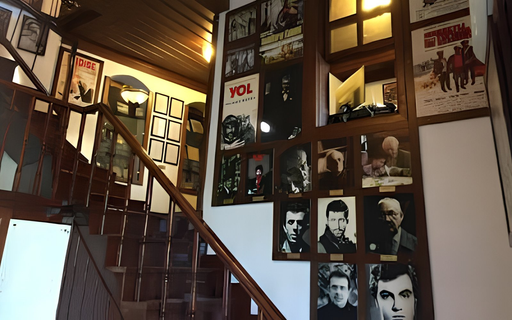
Did you know that there is a cinema museum in Adana?
As a cinephile, the existence of such a museum filled me with great excitement, and I wanted to introduce this wonderful museum to you.
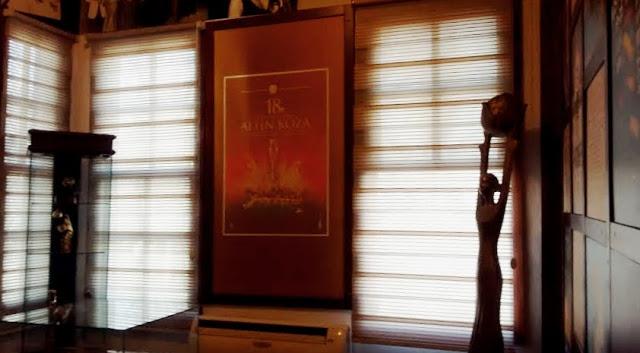
One of the historic Adana houses in the Tepebağ district was restored by the Adana Metropolitan Municipality and transformed into a cinema museum; it was opened to the public in 2011 as part of the events for the 18th International Adana Golden Boll Film Festival.
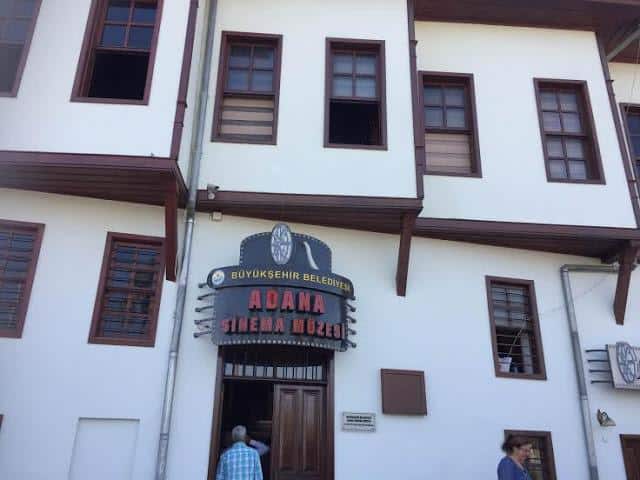
If you ask, “Why Adana?”… Well, at one time, Adana served as the driving force—the locomotive—of Yeşilçam; the entire industry was steered by Adana’s cinema-going public and its theater operators. I imagine the situation becomes much clearer when I mention that, between the late 1960s and the mid-1970s, there were reportedly 200 open-air cinemas operating in Adana alone.
During my visit to the museum, I was astonished to discover just how many artists hailing from Adana were active in the industry. Then, I found myself astonished all over again—this time, at my own surprise. And what a roster of artists it is!
Actors: Yılmaz Güney, Ali Şen, Şener Şen, Aytaç Arman, Menderes Samancılar, Bilal İnci, Demir Karahan, Salih Güney, Yılmaz Köksal, Meral Zeren, Levent Özdilek…
Screenwriters: Orhan Kemal, Yaşar Kemal, Muzaffer İzgü…
Producers and Directors: Abdurrahman Keskiner, Ali Özgentürk, İrfan Atasoy, Yılmaz Duru, Sami Güçlü, Şahin Kaygun…
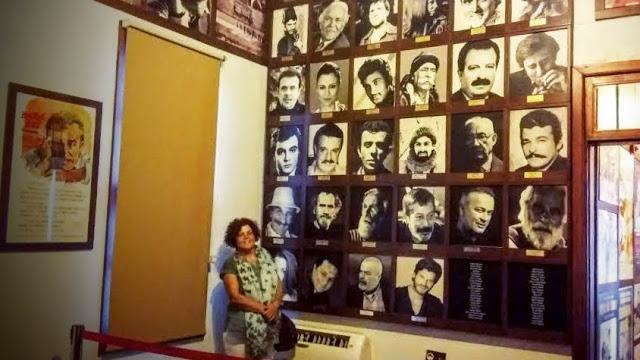
One wall of the Adana Filmmakers’ Chamber is dedicated to photographs of filmmakers from Adana. Those featured in the photographs represent only a fraction of the city’s filmmakers; as there was no remaining space, the names of the other artists have been listed instead. Scanning and archival efforts are reportedly proceeding intensively.
Admission to the museum is free, and young staff members accompany you to provide guidance throughout your visit.
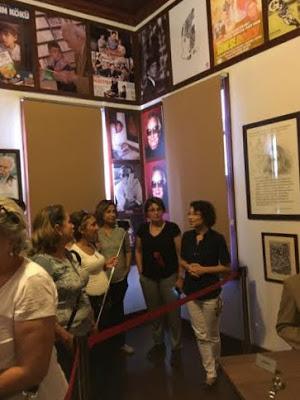 – Yılmaz Güney Room
– Adana Filmmakers Room
– Golden Boll Room
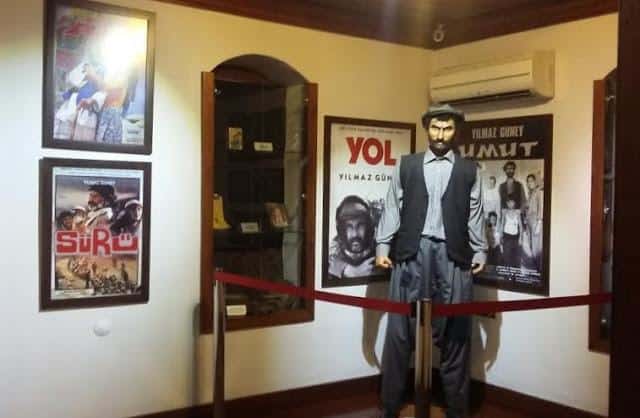
– Library and Archive RoomIt is divided into sections as follows.On display in the Yılmaz Güney Room are a wax figure of “Cabbar”—the character portrayed by Yılmaz Güney in his film *Umut* (Hope)—along with posters and photographs from his films, various personal items used in some of his movies (such as a firearm, a coffee cup set, etc.), and the award he received at the Golden Boll Film Festival in 1971.
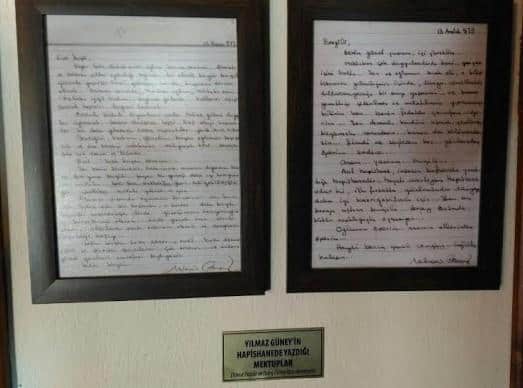
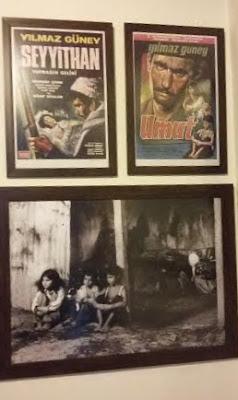
In the corridor at the entrance of the room, Yılmaz Güney’s letters written to his wife from prison, along with posters for the films *Umut* and *Seyyithan*, are displayed.
In a corner of the Adana Filmmakers’ Chamber, Abidin Dino and Orhan Kemal are immersed in a deep conversation about art. Years later, Abidin Dino was sent into exile in the very city where his grandfather, Abidin Pasha, and his older brother, Arif Dino, had once served as governors. It was here that his enduring friendships with Orhan Kemal and Yaşar Kemal began. Orhan Kemal, whose sole means of livelihood was his pen, found himself compelled to work as a screenwriter as well. He penned the screenplays and dialogue for numerous films, such as *Gurbet Kuşları* and *Murtaza*.
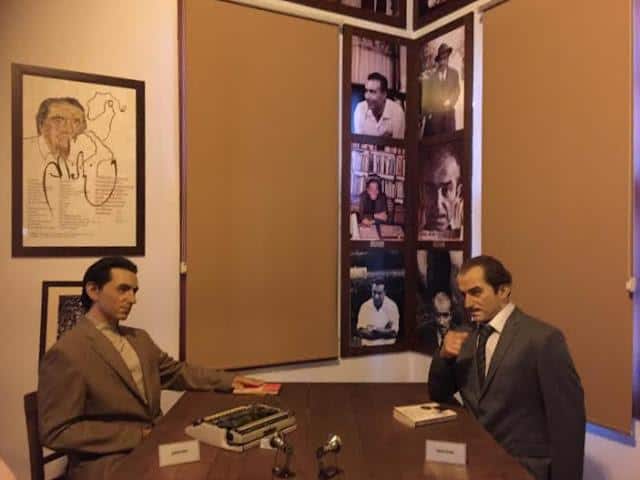
Cinema posters featuring filmmakers from Adana figure prominently among the exhibits. One of these is the poster for the film *Güneşe Doğru* (Towards the Sun), directed by Nazım Hikmet in 1937 and starring Arif Dino, Ferdi Tayfur, and Güzin Dino. Nazım Hikmet contributed to numerous motion pictures behind the scenes; however, this is the only film poster bearing his name—the only one on which he permitted his name to appear. Abidin Dino’s signature, meanwhile, can be seen in the film’s set design. It is also possible to view the poster for *Goal World Cup 1966*—the first and only feature film directed by Abidin Dino, which he shot during the 1966 World Cup. Muzaffer İzgü’s typewriter and personal belongings have taken their place in another corner of the room.
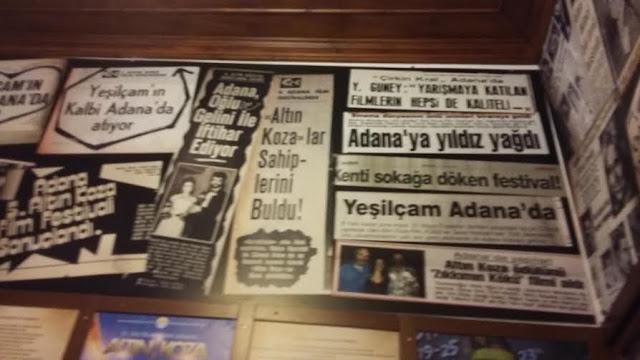
At the entrance of the museum, a photograph of Fatma Girik and Yılmaz Güney—who won the Best Actress and Best Actor awards at the 1971 Golden Boll Film
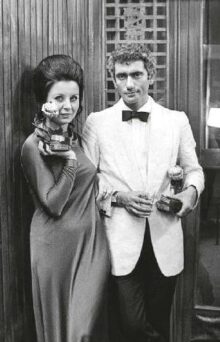

Festival—together draws attention.
Among the items on display at the museum are personal belongings—such as clothing, a watch, and other effects—of Yılmaz Duru (1929–2010), the actor, producer, director, screenwriter, and accomplished dancer hailing from Adana.
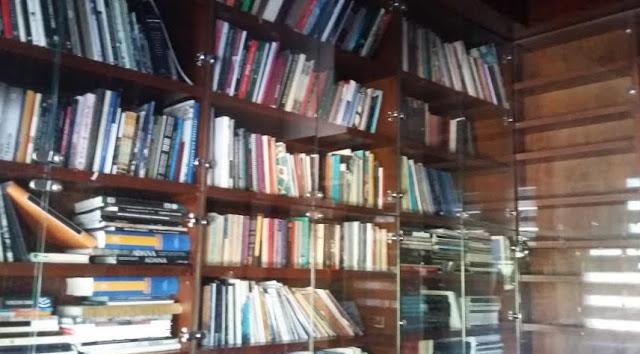
The museum also features a dedicated library and archive room, a thoughtful addition for the benefit of cinema enthusiasts.
A cinema museum suits Adana—a city holding a significant place in the history of Turkish cinema—perfectly. The city has nurtured a great number of cinematic artists, and it has created a beautiful museum in their memory. My thanks go to everyone who contributed to this project, and especially to the Adana Metropolitan Municipality.
Although I toured the Adana Cinema Museum with great admiration, I cannot conclude this piece without offering a suggestion. The museum is currently housed in a historic mansion, and the available space has been utilized very effectively. I have heard that plans are underway to incorporate the adjacent building into the museum complex as well.
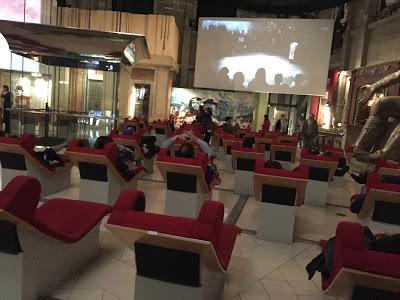
Given the opportunity to create a new section, I hope that consideration will be given to establishing a continuous film screening area—similar to the approach taken at the National Museum of Cinema in Turin, Italy—by installing a cinema screen and comfortable seating in one of the halls. I have also attached a photograph I took at the Turin museum.
If your travels take you to Adana, be sure to pay a visit to Turkey’s very first city cinema museum. Embark on a nostalgic journey amidst the cinema posters, and watch a film of your choice from the archives. It will do you good…
If you would like to tour the museum via video…