
Kaman Japanese Garden and Kale Höyük Excavation
When I learned that the largest Japanese garden outside of Japan is located in Kaman, Kırşehir, I was both surprised and—in my mind’s eye—envisioned a garden filled with boundless sakura trees, with pink and white blossoms stretching as far as the eye could see, and where the whispers of wind chimes could be heard.
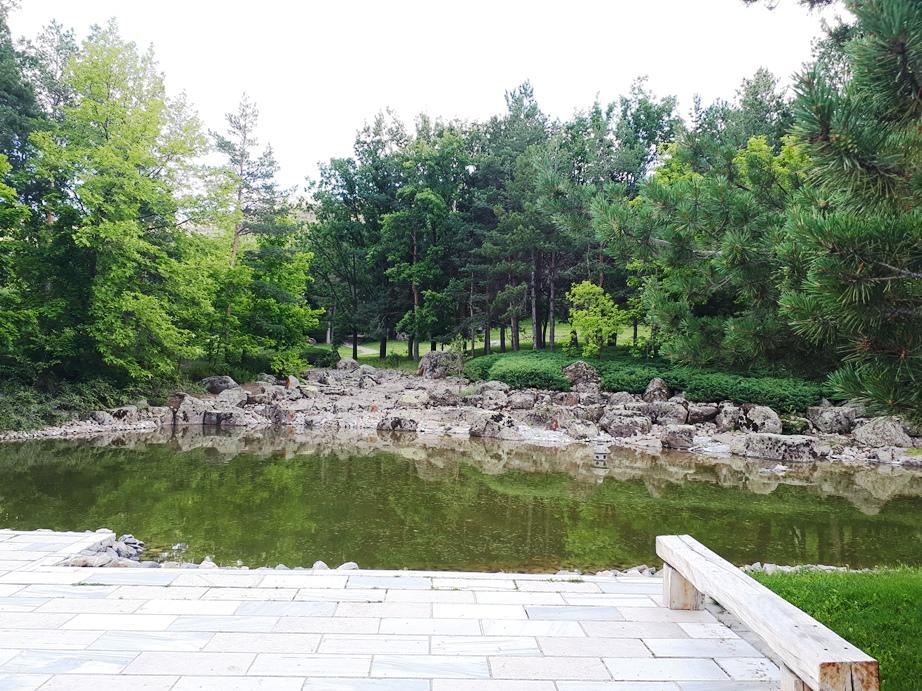
However, the garden I wandered through was very different from these—more enchanting, appealing to both the eye and the soul—almost like a space for purification or meditation. Or perhaps that is simply how I felt.
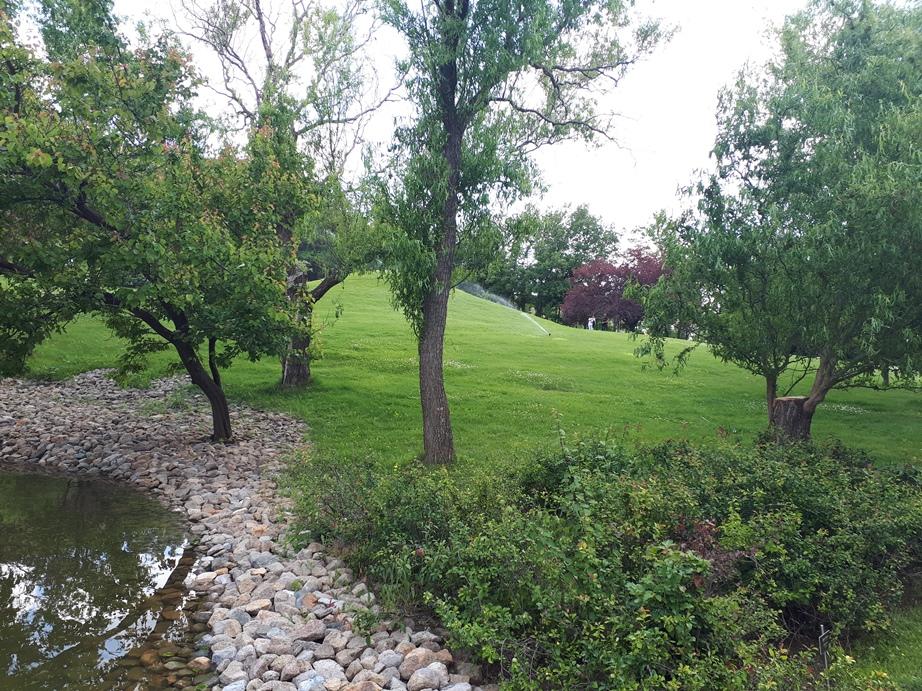
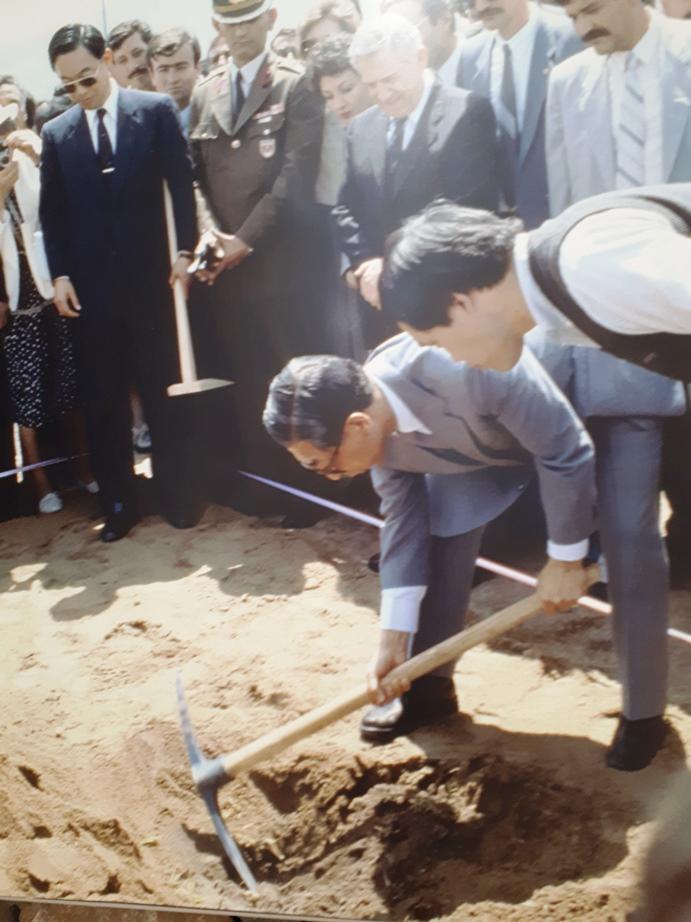
This garden was constructed in 1993 by the Japan-Middle East Cultural Center to commemorate the initiation of the Kalehöyük excavations by His Imperial Highness Prince Takahito Mikasa, and with the aim of creating a recreational area for the local community. The Japanese Garden is renowned as the largest garden of its kind located outside the borders of Japan.
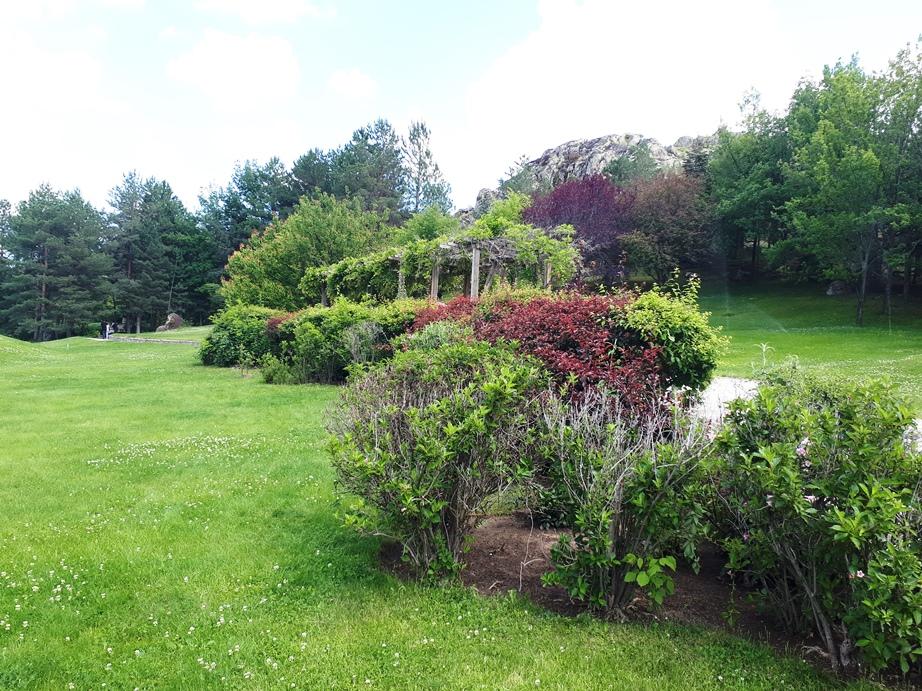
The Mikasanomiya Memorial Garden is designed using the “Shakkei” technique (an arrangement technique that integrates the garden with the surrounding natural landscape) and the “Kaiyu” style (a style in which various scenic views within the garden are revealed as one strolls through it).
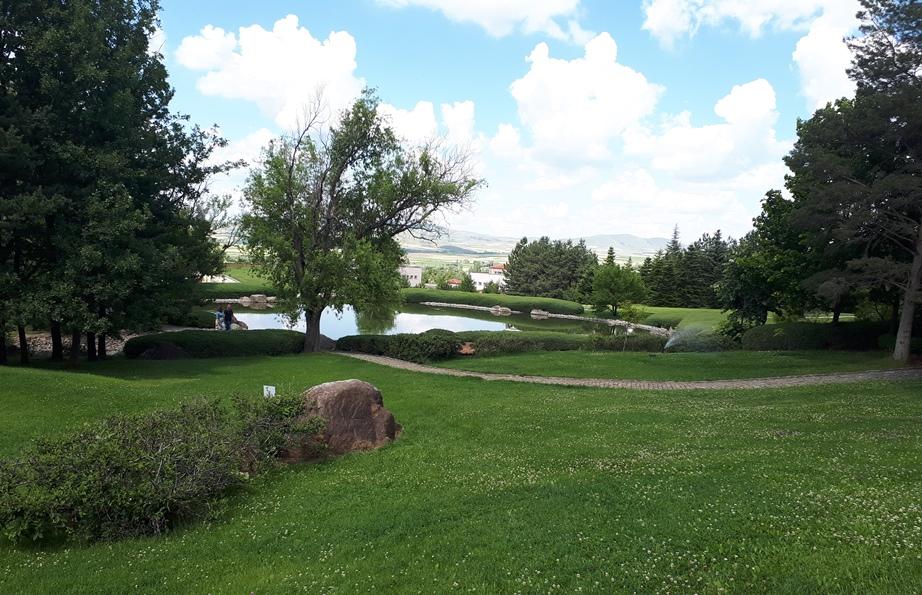
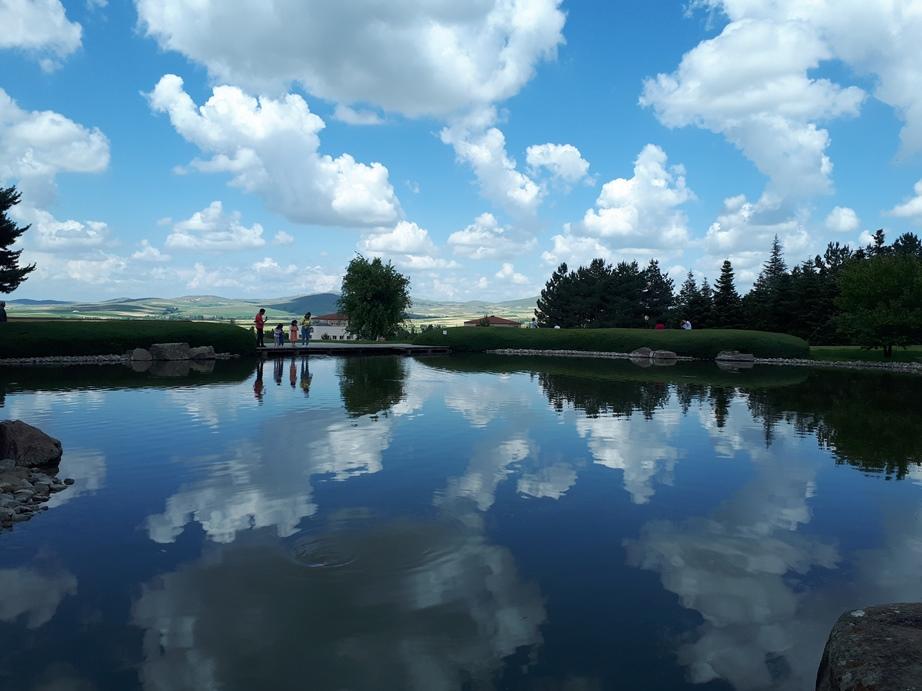
There are benches situated around the pond located in the garden. As you gaze upon the various shades of green, the trees, the miniature sculptures, and the reflection of the sky on the water, you feel as though you have stepped into another dimension.
It is possible to see various fruits on trees brought from Japan and planted without disturbing the natural landscape.
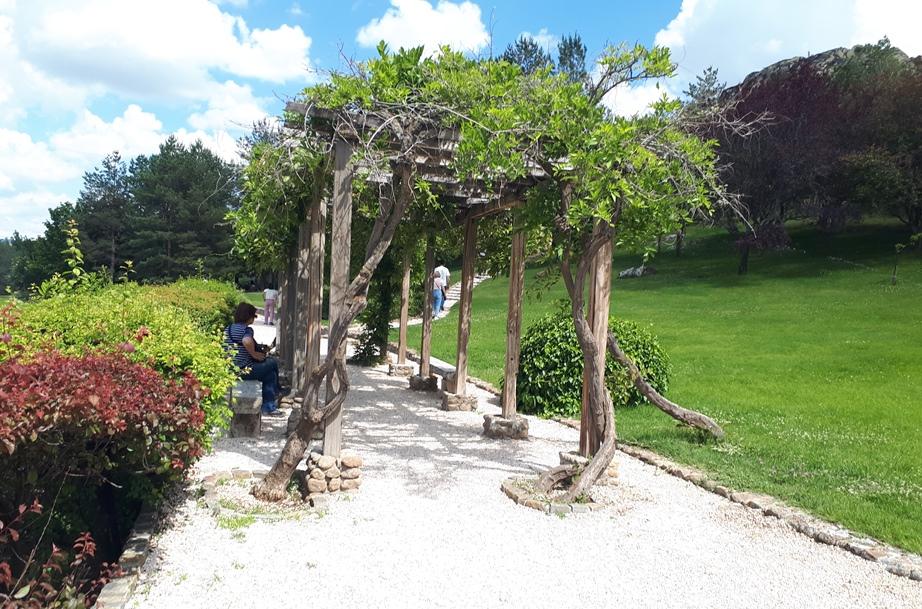
You walk through an endless expanse of greenery—alongside small streams, beneath vine-clad arbors, and reading the names of various trees.
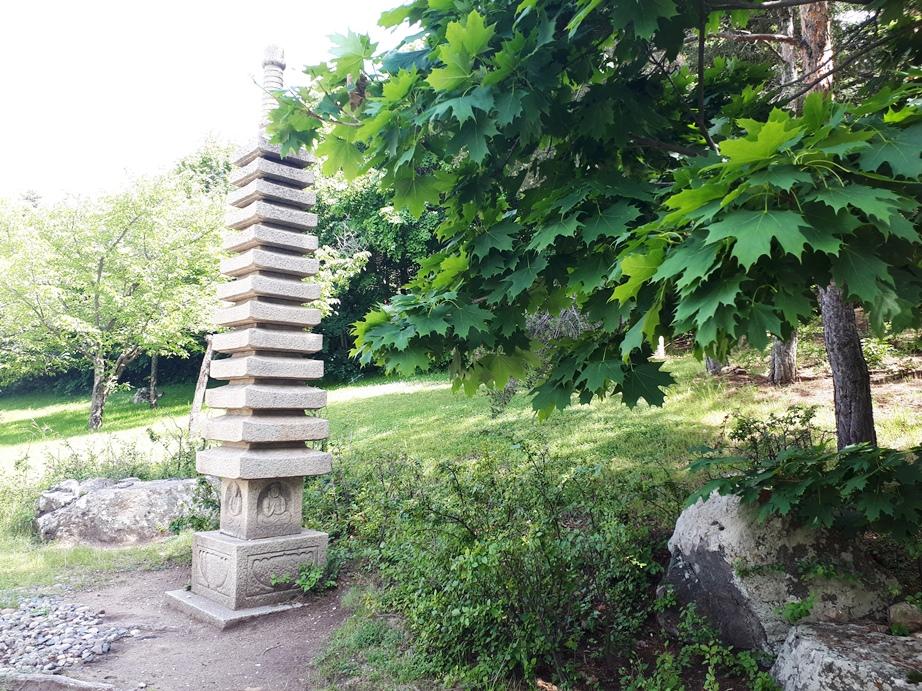
Tiny statues and symbols of Japanese culture have been placed along the edge of the pond and nestled among the trees.
In this area—which bears little resemblance to the gardens or parks we are accustomed to—observing the perspective of a different culture, along with its reverence for and harmony with nature, led me to reflect that there is, in fact, much we can learn from cultures seemingly distant from our own. While cherry blossoms were scarce, the site possessed an enchanting lushness and a unique atmosphere that beckoned one toward tranquility.
Kale Höyük
As is generally known, *höyüks* (tells) are ancient settlement sites that, over the passage of time and for various reasons, have become covered by soil and transformed into hill-like formations. Typically, *höyüks* consist of multi-layered accumulations of settlements stacked one atop another, exhibiting a stratification wherein the most recent layers—closest to the present day—are situated at the very top, while the layers extend progressively further back into antiquity as one descends.
Kale Höyük is situated in Kaman, a locale boasting a settlement history spanning approximately 5,000 years, dating back to 3000 BC.
The mound measures approximately 280 meters in diameter and stands 16 meters in height. Since 1986, excavations at the *höyük* have been conducted under the direction of Sachihiro Omura, on behalf of the Japanese Institute for Middle Eastern Cultures and the Japanese Institute of Anatolian Archaeology. These excavations have unearthed four distinct layers of civilization—along with the specific phases associated with each—as well as numerous structural strata.
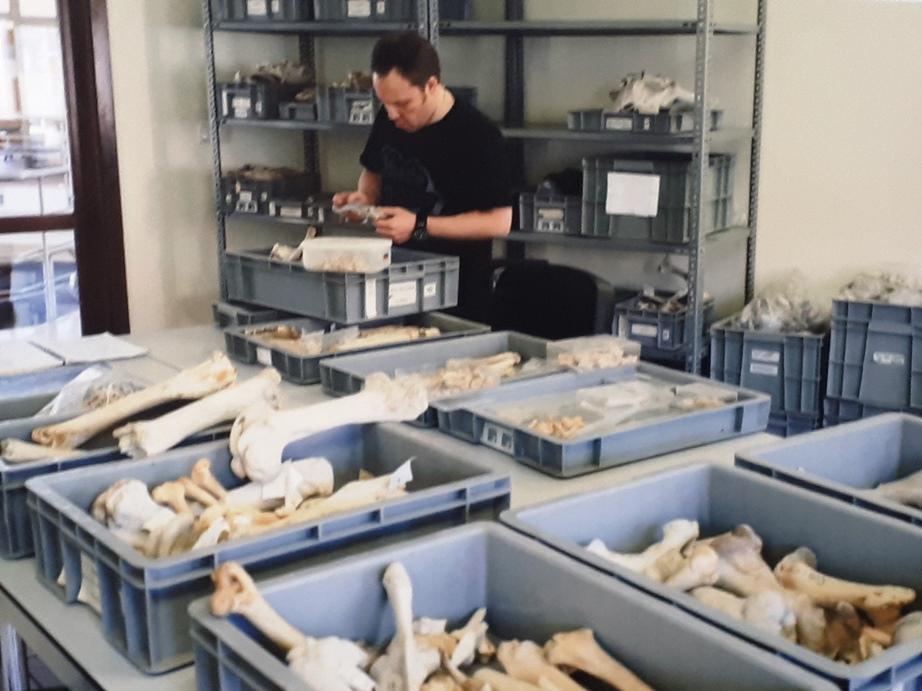
Artifacts recovered during excavations indicate that Kaman and its surrounding region have served as a settlement site dating back as far as 3000 BC. Consequently, it appears that the Hittites established a settlement here around 3000 BC.
Over the course of history, Kaman remained under the dominion of various powers for extended periods—including the Hittites, Phrygians, Assyrians, Persians, Romans, and Byzantines—as well as the Mengücekids, Eretnids, Karamanids, and Dulkadirids.
Excavation finds unearthed at Kaman-Kalehöyük—which pertain to the aforementioned civilizations—are currently on display in a museum situated adjacent to the Japanese Garden.
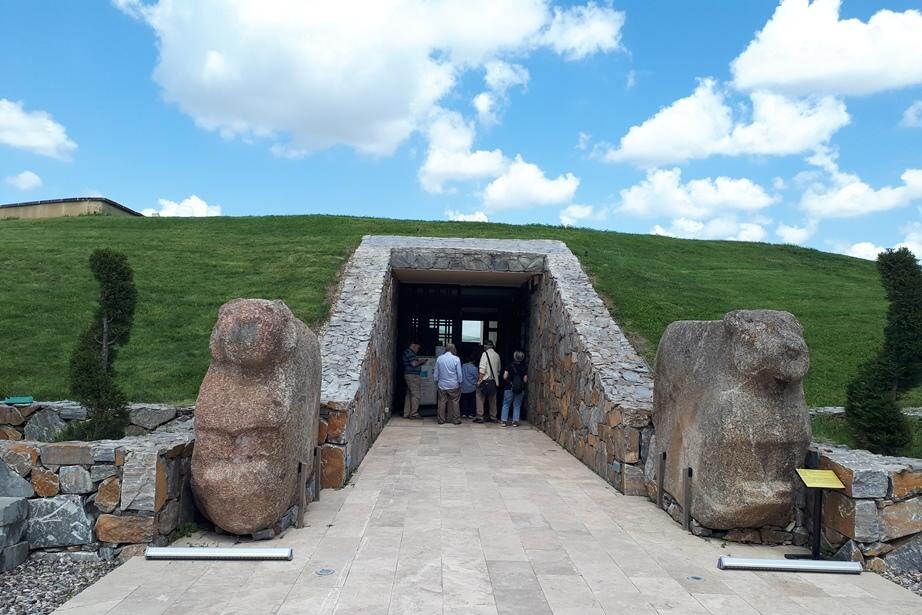
On either side of the museum’s entrance, two Hittite lions stand as if to say, “This place is under my protection.”
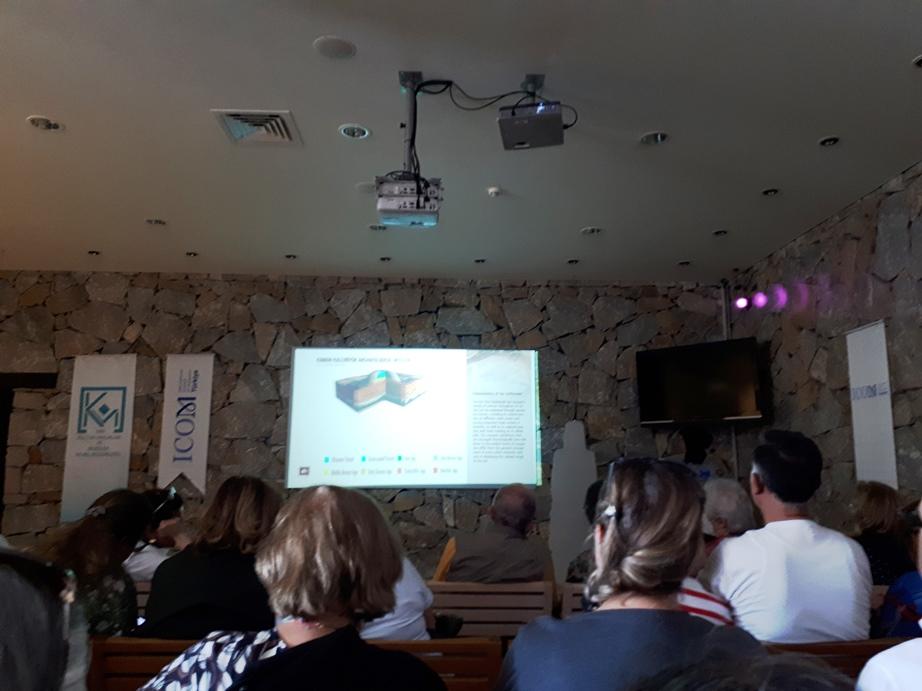
Upon entering the museum, you have the option—should you wish—to sit in comfortable armchairs and watch a short introductory film regarding the Kale Höyük excavation, the museum, and the Japanese Garden.
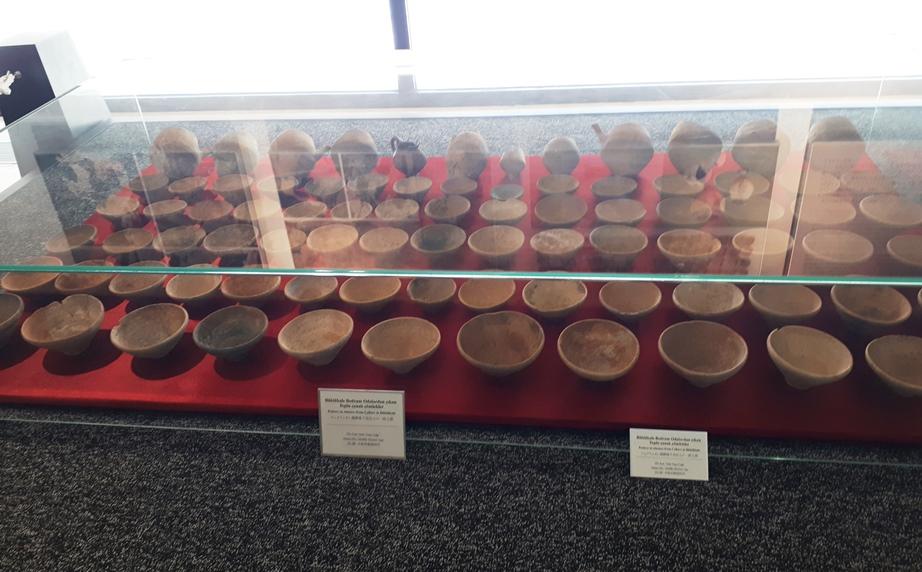
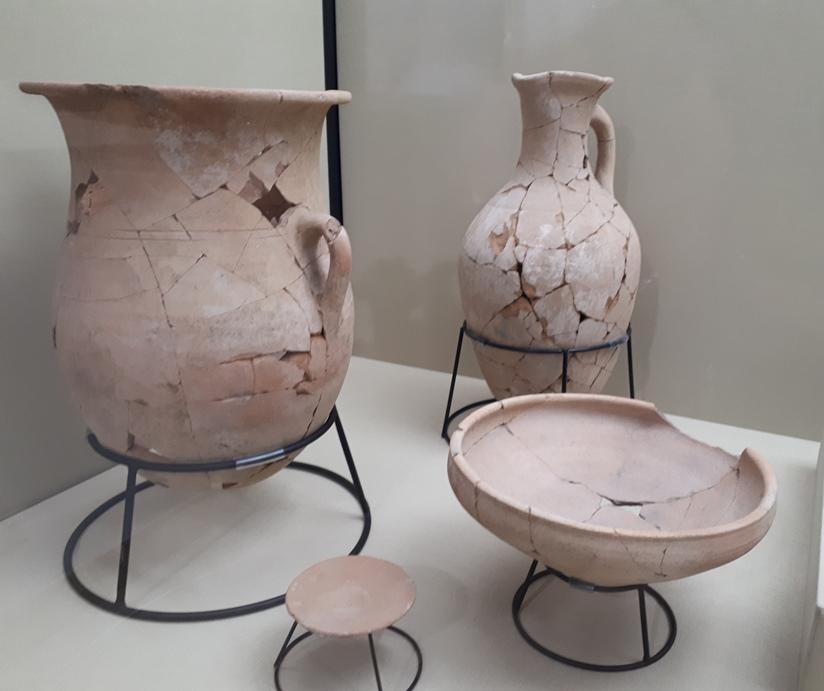
The museum exhibits artifacts pertaining to four distinct periods, four stratigraphic layers, and various civilizations:
Layer IV: The Early Bronze Age (2300–1900 BC)
Layer III: The Middle/Late Bronze Age (1900–1500 BC)
Layer II: The Iron Age (1200 BC – 300 AD)
Period of Non-Occupation
Layer I: The Ottoman Period (1400 AD)
After viewing the exquisite remains—unearthed from the mound and spanning vastly different eras of history—stepping out of the museum and into the Japanese Garden transports you to a different culture within that very same timeframe. What do you think? Perhaps the dimensions of time and space are merely a trick of the mind…